Talking About Learning a Musical Instrument
वाद्ययंत्र सीखने के बारे में बात करना
Someone is expressing interest in learning a new instrument, asking for advice, or sharing their experience of learning an instrument.
कोई नया वाद्ययंत्र सीखने में दिलचस्पी दिखा रहा है, सलाह माँग रहा है या वाद्ययंत्र सीखने का अपना अनुभव साझा कर रहा है।
संवाद9
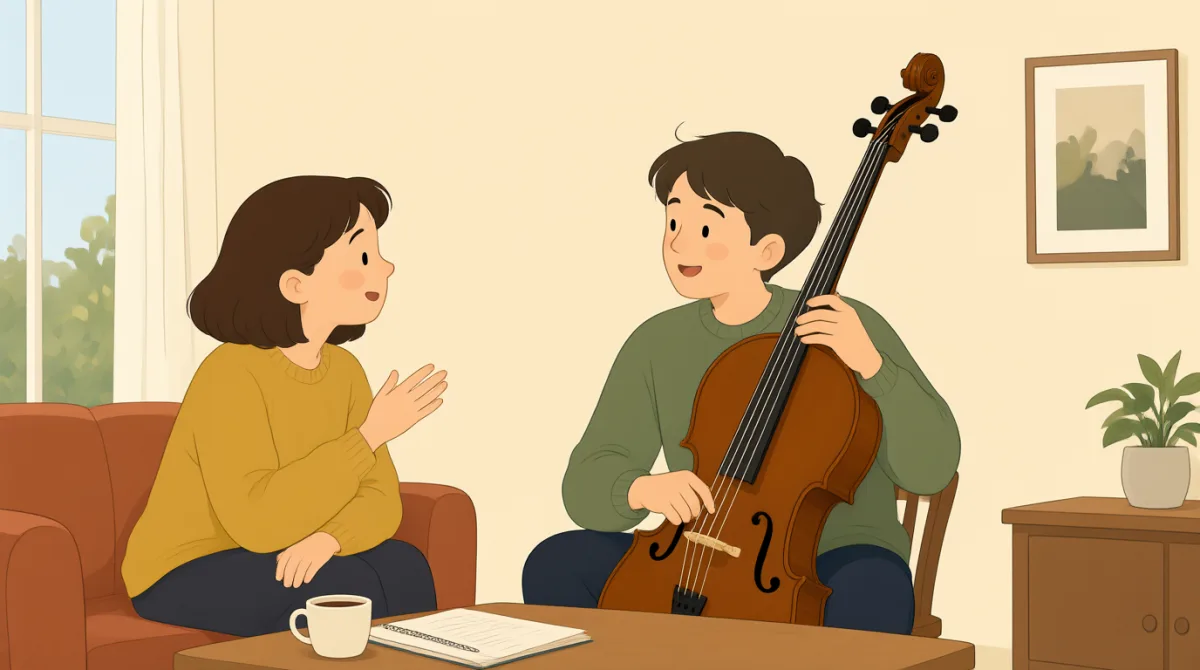

Hey Jack, I've been thinking about picking up a musical instrument again. I used to play a little piano when I was a kid.
अरे जैक, मैं फिर से कोई वाद्ययंत्र सीखने के बारे में सोच रही हूँ। बचपन में मैं थोड़ा पियानो बजाया करती थी।

Oh, really? That's cool! What instrument are you leaning towards? Piano is a great foundation.
अरे, सच में? बहुत बढ़िया! तुम कौन-सा वाद्ययंत्र सीखने का सोच रही हो? पियानो एक अच्छी बुनियाद है।
I was actually considering the guitar. It seems like a lot of fun, and pretty versatile too. Any advice for a beginner?
दरअसल, मैं गिटार सीखने के बारे में सोच रही थी। यह काफ़ी मज़ेदार और बहुत तरह के संगीत के लिए काम आने वाला लगता है। शुरुआत करने वालों के लिए कोई सलाह?
Guitar is an excellent choice! My advice would be to start with an acoustic guitar first. It helps build finger strength. And definitely find a good online tutorial or a basic lesson book.
गिटार एक बेहतरीन चुनाव है! मेरी सलाह है कि पहले एक अकॉस्टिक गिटार से शुरू करो। इससे उँगलियों में ताकत आती है। और हाँ, कोई अच्छा ऑनलाइन ट्यूटोरियल या शुरुआती लोगों के लिए कोई किताब ज़रूर ढूँढ़ना।
That makes sense. I was a bit worried about how much time I'd need to dedicate to it. Do you think a few hours a week would be enough to make progress?
यह बात सही है। मुझे थोड़ी चिंता थी कि इसके लिए कितना समय देना पड़ेगा। तुम्हें क्या लगता है, हफ़्ते में कुछ घंटे अभ्यास करना तरक्की के लिए काफ़ी होगा?
Absolutely! Consistency is key. Even 20-30 minutes a day is more effective than one long session once a week. Just try to make it a habit.
बिलकुल! नियमित अभ्यास सबसे ज़रूरी है। रोज़ के 20-30 मिनट भी हफ़्ते में एक बार लंबे अभ्यास से ज़्यादा असरदार होते हैं। बस इसे अपनी आदत बनाने की कोशिश करो।
Good point. I've heard some people say it can be frustrating at first. Did you experience that when you were learning?
अच्छी बात है। मैंने कुछ लोगों को कहते सुना है कि शुरुआत में यह झुंझलाहट भरा हो सकता है। जब तुम सीख रहे थे, तो क्या तुम्हें भी ऐसा लगा था?
Oh, for sure! There'll be moments you feel like giving up. But don't let it get to you. Every musician goes through that. Just keep practicing and celebrate small victories.
हाँ, बिल्कुल! ऐसे पल आएँगे जब तुम्हारा हार मानने का मन करेगा। लेकिन इसे अपने ऊपर हावी मत होने देना। हर संगीतकार इस दौर से गुज़रता है। बस अभ्यास करते रहो और छोटी-छोटी कामयाबियों का जश्न मनाओ।
Thanks, Jack. That's really encouraging! I'm actually feeling excited to start now.
शुक्रिया, जैक। तुम्हारी बातों से सच में हौसला मिला! अब तो मुझे शुरू करने का उत्साह हो रहा है।
शब्दावली8
- picking upशुरू करना; सीखना शुरू करना
This phrasal verb means starting to learn or do something new, like a hobby or skill. It's commonly used when talking about beginning a new activity, such as 'picking up a language'.
इस वाक्यांश का मतलब है कोई नई चीज़ सीखना या करना शुरू करना, जैसे कोई शौक या हुनर। इसका इस्तेमाल किसी नई गतिविधि की शुरुआत के बारे में बात करते समय आम तौर पर किया जाता है, जैसे 'picking up a language' (कोई भाषा सीखना शुरू करना)।
- leaning towardsकी ओर झुकाव होना
This means having a preference or inclination for something. Use it when expressing a choice or opinion, like 'I'm leaning towards the blue shirt'.
इसका मतलब है किसी चीज़ को पसंद करना या उसकी ओर झुकाव होना। अपनी पसंद या चुनाव बताते समय इसका इस्तेमाल करें, जैसे 'I'm leaning towards the blue shirt' (मेरा झुकाव नीली कमीज़ की ओर है)।
- versatileबहुउपयोगी; कई तरह से काम आने वाला
Something that can be used in many different ways or situations. In music, a versatile instrument like the guitar can play many styles of songs.
ऐसी चीज़ जिसका इस्तेमाल कई अलग-अलग तरीकों या परिस्थितियों में किया जा सकता हो। संगीत में, गिटार जैसा बहुउपयोगी वाद्ययंत्र कई तरह के गाने बजाने के काम आता है।
- acousticअकॉस्टिक; बिना बिजली से बजने वाला
Referring to a musical instrument that produces sound without electricity, like an acoustic guitar. It's the opposite of electric instruments.
यह ऐसे वाद्ययंत्र के लिए कहा जाता है जो बिजली के बिना आवाज़ पैदा करता है, जैसे अकॉस्टिक गिटार। यह बिजली से बजने वाले वाद्ययंत्रों के विपरीत है।
- dedicateसमर्पित करना; समय देना
To give your time or effort to something important. For example, 'dedicate time to practice' means committing hours to it regularly.
किसी ज़रूरी काम के लिए अपना समय या मेहनत देना। उदाहरण के लिए, 'dedicate time to practice' का मतलब है नियमित रूप से अभ्यास के लिए समय निकालना।
- consistencyनियमितता
The quality of doing something regularly and steadily. In learning, consistency means practicing every day for better results.
किसी काम को लगातार और नियमित रूप से करने का गुण। सीखने में नियमितता का मतलब है बेहतर नतीजों के लिए हर दिन अभ्यास करना।
- frustratingझुंझलाहट भरा; खीझ पैदा करने वाला
Causing annoyance or irritation because it's difficult. Beginners often find learning instruments frustrating at first.
मुश्किल होने की वजह से जो चीज़ खीझ या चिढ़ पैदा करे। शुरुआती लोगों को वाद्ययंत्र सीखना अक्सर शुरू में झुंझलाहट भरा लगता है।
- encouragingहौसला बढ़ाने वाला
Giving someone confidence or hope to do something. Positive advice is encouraging, like motivating a friend to try a new hobby.
जो किसी को कुछ करने का आत्मविश्वास या उम्मीद दे। सकारात्मक सलाह हौसला बढ़ाती है, जैसे किसी दोस्त को नया शौक आज़माने के लिए प्रेरित करना।
मुख्य वाक्य8
- 1
I've been thinking about picking up a musical instrument again.
मैं फिर से कोई वाद्ययंत्र सीखने के बारे में सोच रही हूँ।
This sentence uses the present perfect continuous 'I've been thinking' to show an ongoing thought. It's useful for starting conversations about personal interests or plans, like sharing hobbies with friends.
इस वाक्य में 'I've been thinking' का इस्तेमाल लगातार चल रहे विचार को दिखाने के लिए हुआ है। दोस्तों के साथ शौक साझा करने जैसे मौकों पर अपनी दिलचस्पियों या योजनाओं के बारे में बातचीत शुरू करने के लिए यह उपयोगी है।
- 2
What instrument are you leaning towards?
तुम कौन-सा वाद्ययंत्र सीखने का सोच रही हो?
A question using 'leaning towards' to ask about preferences. It's a natural way to inquire about someone's choice in casual talks, helping to keep the conversation flowing.
'leaning towards' के साथ यह सवाल किसी की पसंद जानने के लिए पूछा जाता है। अनौपचारिक बातचीत में किसी के चुनाव के बारे में पूछने का यह सहज तरीका है और बातचीत आगे बढ़ाने में मदद करता है।
- 3
Any advice for a beginner?
शुरुआत करने वालों के लिए कोई सलाह?
This is a polite request for suggestions. Use it when seeking tips on new activities. The structure is simple and common in advice-seeking dialogues.
यह सुझाव माँगने का विनम्र तरीका है। नई गतिविधियाँ शुरू करते समय कुछ उपयोगी सुझाव माँगने के लिए इसका इस्तेमाल करें। सलाह माँगने वाली बातचीत में यह सरल और आम ढाँचा है।
- 4
Consistency is key.
नियमितता सबसे ज़रूरी है।
An idiomatic expression meaning regularity is most important. It's useful for motivating others or yourself in learning contexts, like studying or exercising.
यह मुहावरेदार अभिव्यक्ति बताती है कि नियमित रूप से कुछ करना सबसे अहम है। पढ़ाई या व्यायाम जैसी चीज़ें सीखते समय खुद को या दूसरों को प्रोत्साहित करने के लिए इसका इस्तेमाल करें।
- 5
Even 20-30 minutes a day is more effective than one long session once a week.
रोज़ के 20-30 मिनट भी हफ़्ते में एक बार लंबे अभ्यास से ज़्यादा असरदार होते हैं।
This compares two options using 'more... than' for emphasis. It's practical for discussing practice routines, showing why short daily efforts work better.
इस वाक्य में 'more... than' का इस्तेमाल दो विकल्पों की तुलना करने और बात पर ज़ोर देने के लिए हुआ है। अभ्यास की दिनचर्या पर बात करते समय यह उपयोगी है और बताता है कि रोज़ थोड़ा-थोड़ा अभ्यास करना बेहतर क्यों है।
- 6
There'll be moments you feel like giving up.
ऐसे पल आएँगे जब तुम्हारा हार मानने का मन करेगा।
Uses future 'there'll be' for predictions and 'feel like' for emotions. Helpful for empathizing with challenges, common when sharing learning experiences.
इसमें अनुमान बताने के लिए भविष्यकाल 'there'll be' और भावना व्यक्त करने के लिए 'feel like' का इस्तेमाल हुआ है। सीखने के अनुभव साझा करते समय आने वाली मुश्किलों के प्रति सहानुभूति जताने के लिए यह उपयोगी है।
- 7
Just keep practicing and celebrate small victories.
बस अभ्यास करते रहो और छोटी-छोटी कामयाबियों का जश्न मनाओ।
Imperative 'keep practicing' gives advice, and 'celebrate small victories' means appreciating progress. Use this to encourage persistence in hobbies or goals.
आदेशसूचक 'keep practicing' सलाह देता है कि अभ्यास जारी रखो, जबकि 'celebrate small victories' का मतलब है अपनी छोटी-छोटी प्रगति की सराहना करना। शौक या लक्ष्य के लिए लगातार कोशिश करते रहने को प्रोत्साहित करने के लिए इसका इस्तेमाल करें।
- 8
That's really encouraging!
तुम्हारी बातों से सच में हौसला मिला!
A response showing appreciation for positive words. It's a simple way to thank someone and express motivation, useful in supportive conversations.
यह सकारात्मक बातों के लिए आभार जताने वाला जवाब है। किसी को धन्यवाद देने और अपना उत्साह दिखाने का यह आसान तरीका है, जो एक-दूसरे का हौसला बढ़ाने वाली बातचीत में काम आता है।