Attending a Religious Ceremony for the First Time
حضور مراسم دينية للمرة الأولى
Someone new to a particular faith or simply curious attends a religious service (e.g., a church service, temple ceremony, mosque prayer) for the first time and asks questions about the customs, rituals, and their meaning.
يحضر شخص حديث العهد بدين معيّن، أو لديه فضول فحسب، شعيرة دينية للمرة الأولى، مثل قداس في كنيسة أو مراسم في معبد أو صلاة في مسجد، ويطرح أسئلة عن العادات والطقوس ومعانيها.
حوار10
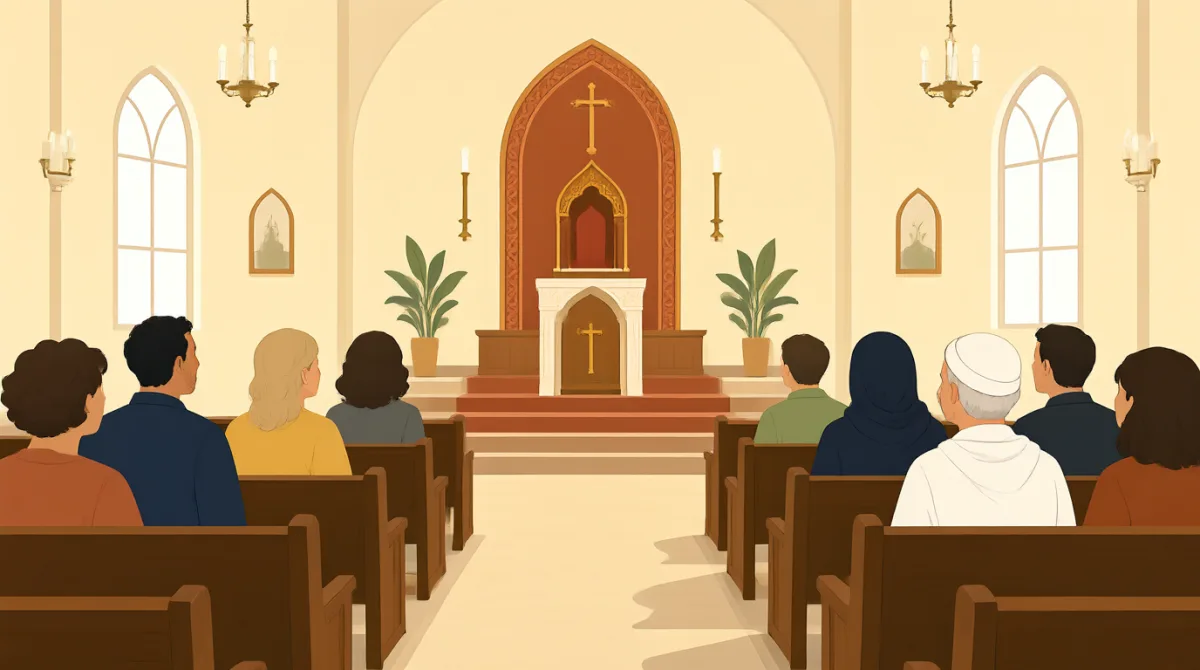

Thanks so much for inviting me to today's service, Jack. It was my first time in a mosque, and it was quite an experience.
شكرًا جزيلًا على دعوتي إلى صلاة اليوم يا جاك. كانت هذه المرة الأولى التي أدخل فيها مسجدًا، وكانت تجربة مميزة فعلًا.

You're very welcome, Emma. I'm glad you came. What did you think? Any questions about what you saw?
العفو يا إيما، يسعدني أنك جئت. ما رأيك؟ هل لديك أي أسئلة عمّا رأيت؟
Definitely! I noticed everyone removing their shoes before entering the prayer hall. Is there a specific reason for that?
بالتأكيد! لاحظت أن الجميع يخلعون أحذيتهم قبل دخول قاعة الصلاة. هل هناك سبب محدد لذلك؟
Yes, it's a sign of respect and cleanliness. The prayer area is considered sacred, so keeping it clean and pure is essential for prayer.
نعم، فهذا دليل على الاحترام والنظافة. تُعدّ منطقة الصلاة مكانًا مقدسًا، لذا فإن الحفاظ على نظافتها وطهارتها أمر ضروري للصلاة.
That makes sense. And I also saw some people performing what looked like a ritual washing before prayers. What was that called?
هذا منطقي. ورأيت أيضًا بعض الناس يقومون بما بدا كأنه غسل طقوسي قبل الصلاة. ماذا يُسمّى ذلك؟
That's called Wudu, or ablution. It's a purification ritual involving washing certain parts of the body before prayer. It's both physical and spiritual preparation.
يُسمّى ذلك الوضوء. وهو طقس تطهّر يشمل غسل أجزاء معينة من الجسم قبل الصلاة. إنه استعداد جسدي وروحي في آن واحد.
I see. It's very thorough. And the prayer itself, with everyone bowing and prostrating together, was really moving.
فهمت. إنه دقيق جدًا. أما الصلاة نفسها، حين يركع الجميع ويسجدون معًا، فقد أثّرت في نفسي حقًا.
It is. The movements symbolize humility and submission to God. It's a central part of our worship.
صحيح. ترمز هذه الحركات إلى التواضع والخضوع لله. وهي جزء أساسي من عبادتنا.
Thank you for explaining all this, Jack. It really helped me understand the significance of everything. I'd love to learn more.
شكرًا على شرح كل هذا يا جاك. لقد ساعدني حقًا على فهم مغزى كل شيء. أودّ أن أعرف المزيد.
My pleasure, Emma. Feel free to come again anytime. There's always something new to learn.
على الرحب والسعة يا إيما. يمكنك العودة في أي وقت. هناك دائمًا شيء جديد نتعلمه.
المفردات9
- mosqueمسجد
A mosque is a building where Muslims go to pray and worship. It's like a church for Christians or a temple for Buddhists. Use this word when talking about Islamic places of worship.
المسجد مبنى يذهب إليه المسلمون للصلاة والعبادة. وهو يشبه الكنيسة لدى المسيحيين أو المعبد لدى البوذيين. تُستخدم هذه الكلمة عند الحديث عن أماكن العبادة الإسلامية.
- serviceشعيرة دينية
In religion, a service is a formal meeting or ceremony where people pray or worship together. It's a common word for events in churches, mosques, or temples.
في السياق الديني، تعني كلمة "service" اجتماعًا أو مراسم رسمية يصلّي فيها الناس أو يعبدون معًا. وهي كلمة شائعة للفعاليات التي تُقام في الكنائس والمساجد والمعابد.
- prayer hallقاعة الصلاة
A prayer hall is the main room in a mosque or temple where people gather to pray. It's a specific term for the sacred area used for religious activities.
قاعة الصلاة هي الغرفة الرئيسية في مسجد أو معبد، حيث يجتمع الناس للصلاة. ويشير هذا المصطلح تحديدًا إلى المكان المقدس المخصّص للأنشطة الدينية.
- sacredمقدّس
Sacred means holy or very important in a religious sense, not to be disrespected. Use it to describe places, objects, or actions connected to faith, like a sacred book.
تعني كلمة "sacred" مقدّسًا أو ذا أهمية كبيرة من الناحية الدينية، ويجب عدم انتهاك حرمته. تُستخدم لوصف أماكن أو أشياء أو أفعال مرتبطة بالإيمان، مثل كتاب مقدّس.
- ritualطقس
A ritual is a series of actions done in a fixed way, often in religious ceremonies, to show respect or prepare spiritually. It's useful for describing traditions in any faith.
الطقس سلسلة من الأفعال التي تُؤدّى بطريقة محددة، وغالبًا ما تكون جزءًا من مراسم دينية للتعبير عن الاحترام أو للاستعداد الروحي. وتفيد هذه الكلمة في وصف التقاليد لدى مختلف الأديان.
- ablutionوضوء
Ablution is the act of washing parts of the body as a religious purification before prayer. In Islam, it's part of getting ready to worship, similar to cleaning before a special event.
يعني "ablution" غسل أجزاء من الجسم للتطهّر دينيًا قبل الصلاة. وفي الإسلام، يُعدّ جزءًا من الاستعداد للعبادة، على نحو يشبه التنظّف قبل مناسبة خاصة.
- purificationتطهير
Purification means cleaning something to make it pure, especially in a spiritual way to remove impurities before religious acts. It's key in many faiths for preparing the body and mind.
يعني "purification" تنظيف شيء لجعله طاهرًا، ولا سيما تطهيره روحيًا وإزالة النجاسة قبل أداء الشعائر الدينية. وله أهمية في أديان كثيرة، إذ يساعد على إعداد الجسد والعقل.
- humilityتواضع
Humility is the quality of being modest and not proud, often shown in religious practices to respect a higher power. Use it when discussing attitudes in worship.
التواضع هو التحلّي بالاعتدال وعدم التكبر، ويظهر غالبًا في الممارسات الدينية تعبيرًا عن احترام قوة أعلى. استخدم هذه الكلمة عند مناقشة السلوك أثناء العبادة.
- submissionخضوع
Submission means accepting or yielding to authority, like surrendering to God's will in faith. It's a central idea in Islam and other religions, used in spiritual discussions.
يعني "submission" قبول السلطة أو الإذعان لها، مثل التسليم بمشيئة الله في الإيمان. وهو مفهوم أساسي في الإسلام وأديان أخرى، ويُستخدم في النقاشات الروحية.
الجمل الأساسية8
- 1
Thanks so much for inviting me to today's service.
شكرًا جزيلًا على دعوتي إلى صلاة اليوم.
This is a polite way to express gratitude for an invitation. 'Thanks so much' is informal and emphatic, useful for social situations like attending events. Use it to show appreciation right after something happens. Grammar: Simple present tense for ongoing thanks.
هذه طريقة مهذبة للتعبير عن الامتنان على دعوة. عبارة "Thanks so much" غير رسمية وتؤكد شدة الامتنان، وهي مناسبة للمواقف الاجتماعية، مثل حضور فعالية. استخدمها للتعبير عن تقديرك فور حدوث الأمر. من الناحية النحوية، استُخدم المضارع البسيط للتعبير عن شكر مستمر.
- 2
What did you think? Any questions about what you saw?
ما رأيك؟ هل لديك أي أسئلة عمّا رأيت؟
This sentence invites feedback and opens discussion. 'What did you think?' uses past tense for a recent experience, and 'Any questions?' is a common way to check understanding. Useful after sharing an experience, like a ceremony, to encourage conversation.
تطلب هذه العبارة إبداء الرأي وتفتح باب النقاش. تستخدم "What did you think?" زمن الماضي للحديث عن تجربة حديثة، أما "Any questions?" فهي طريقة شائعة للتأكد من الفهم. تفيد بعد مشاركة تجربة، مثل حضور مراسم، لتشجيع الحوار.
- 3
I noticed everyone removing their shoes before entering the prayer hall.
لاحظت أن الجميع يخلعون أحذيتهم قبل دخول قاعة الصلاة.
Here, 'I noticed' reports an observation using past tense. 'Removing their shoes' is a gerund phrase describing the action. This pattern is great for describing what you see in new situations, like cultural customs, to ask about them.
تُستخدم عبارة "I noticed" هنا للإخبار عن ملاحظة بصيغة الماضي. وعبارة "Removing their shoes" تركيب بصيغة اسم الفاعل يصف الفعل. يفيد هذا الأسلوب في وصف ما تراه في مواقف جديدة، مثل العادات الثقافية، ثم السؤال عنها.
- 4
It's a sign of respect and cleanliness.
إنه دليل على الاحترام والنظافة.
This explains a reason using 'It's a sign of' to describe symbolism. Simple structure with 'and' connecting ideas. Useful for explaining cultural or religious practices when someone asks 'why?'. Helps in interfaith dialogues.
تشرح هذه العبارة السبب باستخدام "It's a sign of" للتعبير عن دلالة شيء ما. وهي تركيب بسيط يربط بين فكرتين باستخدام "and". تفيد في شرح الممارسات الثقافية أو الدينية عندما يسأل أحدهم عن السبب، كما تساعد في الحوار بين أتباع الديانات المختلفة.
- 5
That's called Wudu, or ablution.
يُسمّى ذلك الوضوء، أو الاغتسال الطقوسي.
This introduces a term with 'That's called' for naming something, and 'or' gives an alternative word. It's a clear way to teach vocabulary. Use it when explaining specific rituals or terms in conversations about faith.
تقدّم عبارة "That's called" اسم شيء ما، وتقدّم "or" كلمة بديلة. إنها طريقة واضحة لتعليم المفردات. استخدمها عند شرح طقوس أو مصطلحات محددة في أحاديث عن الدين.
- 6
The movements symbolize humility and submission to God.
ترمز الحركات إلى التواضع والخضوع لله.
'Symbolize' means to represent an idea. This sentence uses present tense for general truths. Useful for describing meanings in religious actions; practice it to discuss symbolism in worship or ceremonies.
تعني "Symbolize" أن شيئًا ما يرمز إلى فكرة. تستخدم الجملة المضارع للتعبير عن حقائق عامة. وهي مفيدة في شرح معاني الأفعال الدينية؛ تدرب عليها للحديث عن الرموز في العبادة أو المراسم.
- 7
Thank you for explaining all this. It really helped me understand the significance of everything.
شكرًا على شرح كل هذا. لقد ساعدني حقًا على فهم مغزى كل شيء.
This shows thanks for help with 'Thank you for + gerund (explaining)'. 'It really helped me' uses past tense and 'significance' for importance. Great for ending educational talks, emphasizing how something clarified meaning.
تعبر هذه العبارة عن الشكر باستخدام "Thank you for + gerund (explaining)". وتستخدم "It really helped me" زمن الماضي، كما تستخدم كلمة "significance" للتعبير عن الأهمية. وهي مناسبة لإنهاء حوار تعليمي والتأكيد على أن الشرح أوضح المعنى.
- 8
Feel free to come again anytime.
يمكنك العودة في أي وقت.
'Feel free to' means you're welcome to do something without hesitation. 'Anytime' adds flexibility. This is a friendly invitation phrase, useful in community or social settings to encourage repeat visits.
تعني "Feel free to" أن الشخص مرحّب به لفعل شيء من دون تردد. وتضيف "Anytime" معنى المرونة في الوقت. هذه عبارة ودودة للدعوة، وتفيد في الأوساط الاجتماعية أو المجتمعية لتشجيع الناس على تكرار الزيارة.